
Most corporate events in Lahore go wrong weeks before the day, when nobody wrote down who approves the artwork, when the hall opens for setup, or what happens if the power drops during the CEO's speech. This checklist puts every decision in order, from sign-off to dismantling.
Quick answer: A corporate event planning checklist should cover eight stages in order: agree the goal, budget and approver; book the venue and confirm its setup and power rules; brief production (stage, backdrop, LED, sound, lighting); manage guests and registration; approve content and artwork; lock the final week's run of show and headcount; set up and rehearse; then run the day and the dismantle. In Lahore, add power backup, smog-season and weather checks, and the venue's load-in timings.
Before anything: goal, budget and one approver
Three decisions speed up every later step. Put them on one page for every supplier.
- The goal in one sentence. "Launch the new product to 200 dealers and collect orders" leads to very different choices than "thank staff at the year-end dinner" — from stage size to the menu.
- A budget with a contingency line. Split it into venue, production (stage, backdrop, branding), AV (sound, lighting, screens), catering, guest management, gifts and printing. Keep a separate amount aside for changes — late additions to the guest list and extra branding are the usual ones.
- One person who approves. Name a single approver for artwork, layouts and the run of show. Most late changes happen because three departments each approve the backdrop separately.
If your event has sponsors or a partner brand, agree logo order and sizes at this stage. Changing logo placement after printing means reprinting.
The planning stages at a glance
Lead times depend on the venue and how much is built, so plan in stages and ask each supplier how much time their part needs.
| Stage | What to finish | Owner |
|---|---|---|
| 1. Approval | Goal, guest numbers, date and backup date, budget, approver | Client team |
| 2. Venue | Hall booked, layout drawing, setup and dismantle timings, power and rigging rules in writing | Client team with venue |
| 3. Production brief | Stage size, backdrop or LED, branding list, sound and lighting needs, 3D concept approved | Production supplier |
| 4. Guests | Invitations sent, RSVPs tracked, seating plan, VIP list, registration method | Client team or guest management |
| 5. Content and artwork | Presentations, videos, backdrop and signage artwork approved and sent for print | Client team, then printer |
| 6. Final week | Run of show, cue sheet, supplier contact sheet, final headcount to caterer | Event lead |
| 7. Setup and rehearsal | Build, sound check, screen test, speaker walk-through | Production supplier |
| 8. Event day and after | Registration, show calling, dismantle, payments, feedback | Everyone |
Example (hypothetical): a company planning a 250-guest dealer conference finds that its preferred hotel hall is only free on one date, and that the hall can only be accessed for setup from the night before. That sets every other deadline: the stage must be built off-site and installed overnight, so artwork has to be approved earlier than planned.
Venue checklist for Lahore
Hotel ballrooms, banquet halls, auditoriums, marquees on a lawn and exhibition halls such as Expo Centre Lahore all work differently. Ask the venue for these answers in writing before you sign:
- Hall dimensions, ceiling height and the position of pillars, doors and chandeliers (they decide where the stage and screens can go).
- Setup access: when your production team can enter, and how many hours they get before guests arrive.
- Dismantle: whether everything must be cleared the same night, and at what time.
- Power: available load near the stage, whether a generator is included, and who pays for generator fuel.
- Rules for hanging anything from the ceiling, fixing to walls, and floor protection.
- Whether outside caterers, sound vendors and decorators are allowed, or only the venue's own.
- Parking capacity, VIP drop-off point, and a loading point for the stage and equipment.
- Prayer area, washrooms, a green room for speakers, and a store room for gifts and printed material.
- Whether the venue asks you for any permission, NOC or security arrangement for your event type.
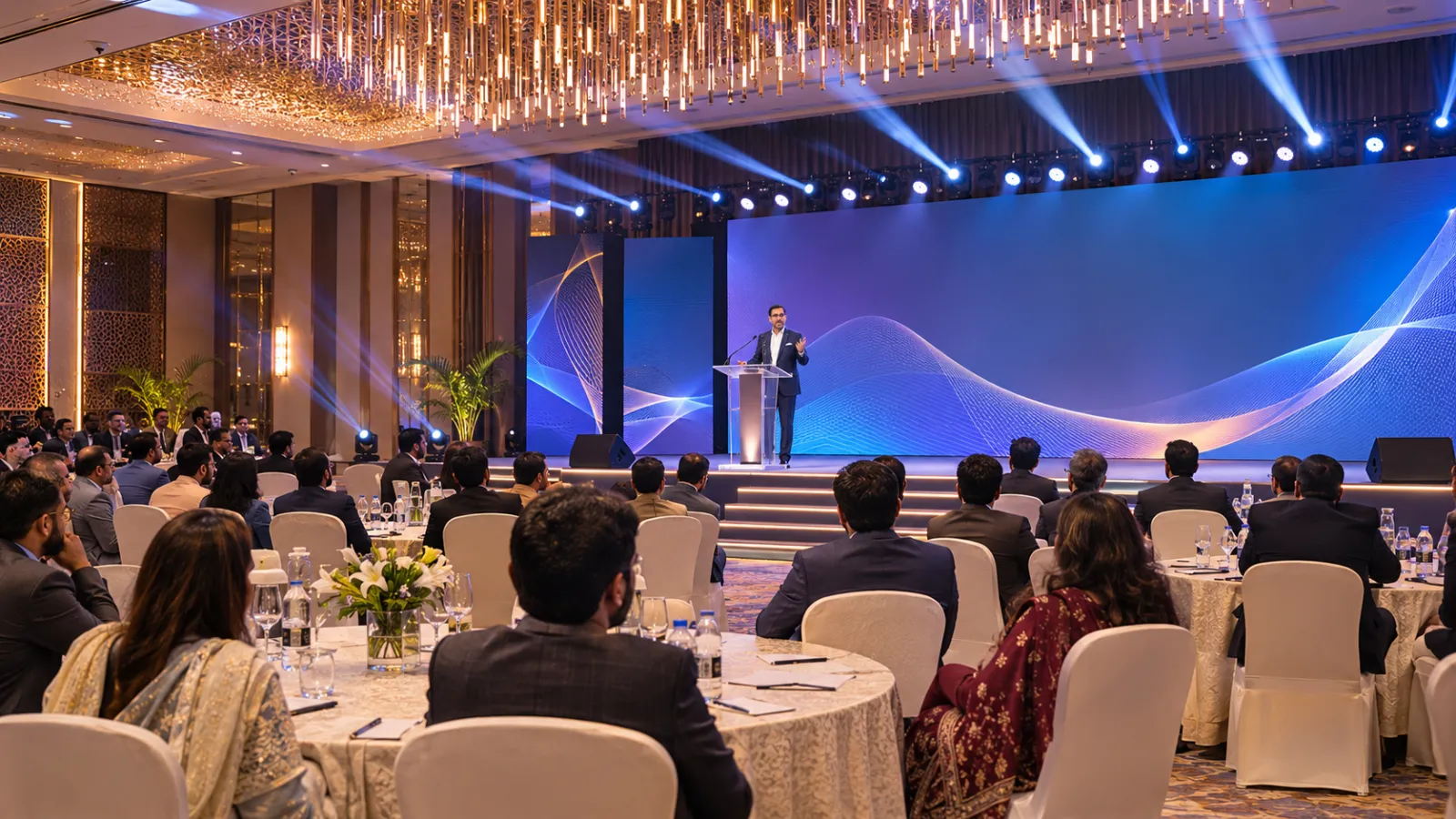
Stage, backdrop and branding
A clear production brief saves the most rework. Give your supplier:
- The hall layout and guest count, so the stage height and width suit the furthest seat.
- What happens on stage — a single speaker at a podium, a panel discussion, a product reveal, an award ceremony or a performance. Each needs a different stage depth, steps and lighting.
- Backdrop type: a printed backdrop, an LED (SMD) screen, or a mix of both. Our guide to LED screen vs printed backdrop explains how to choose.
- The full branding list: entrance arch or welcome board, press wall for photos, standees, directional signage, podium branding, table numbers and stage fascia.
- Brand guidelines and logo files in vector format, plus who signs off the 3D concept.
Ask for a 3D visual of the stage before anything is built — the cheapest point to change size, colours or logos. Six Grid Studios handles this as part of corporate event production in Lahore, and builds stages, backdrops and press walls through our stage and backdrop fabrication team.
Sound, lighting, screens and power
- Microphones: count them by moments, not by speakers. A five-person panel needs five microphones at the same time; a host and podium speaker need at least two, plus a spare.
- Playback: one laptop or media server for all presentations and videos, with every file collected in advance — not speakers' own laptops.
- Screens: confirm the screen's shape (wide or 16:9) before designers build slides and videos, so content fills the screen properly.
- Lighting: stage lighting for faces, not just colour washes. If the event is being filmed or streamed, tell the AV team so they light for the camera.
- Power and backup: list everything that needs power and confirm the backup source with the venue. Ask what happens to screens and sound during a switch from mains to generator.
Agree a single technical contact on the day who can talk to the venue's electrician, so power issues are solved by one person instead of three.
Guests, registration and catering
Guest management
- Invitation, reminder and a day-before message (many teams send these on WhatsApp as well as email).
- RSVP list with name, company, designation and dietary needs.
- Registration desk with printed and digital lists, badges or wristbands.
- Reserved seating and an escort for VIPs and chief guests.
- Ushers briefed on the hall layout, exits and washrooms.
Catering
- Menu tasting and final headcount deadline agreed in writing.
- Service style: buffet, plated, hi-tea or live stations — each needs different space.
- Timing: food service planned around the agenda, not during speeches.
- Ask an outside caterer for its Punjab Food Authority licence (the PFA licenses food businesses under the PFA Act 2011).
- Water and refreshments for crew, speakers and the registration team.
Rehearsal, event day and dismantle
The last 24 hours decide how the event feels. Use this order:
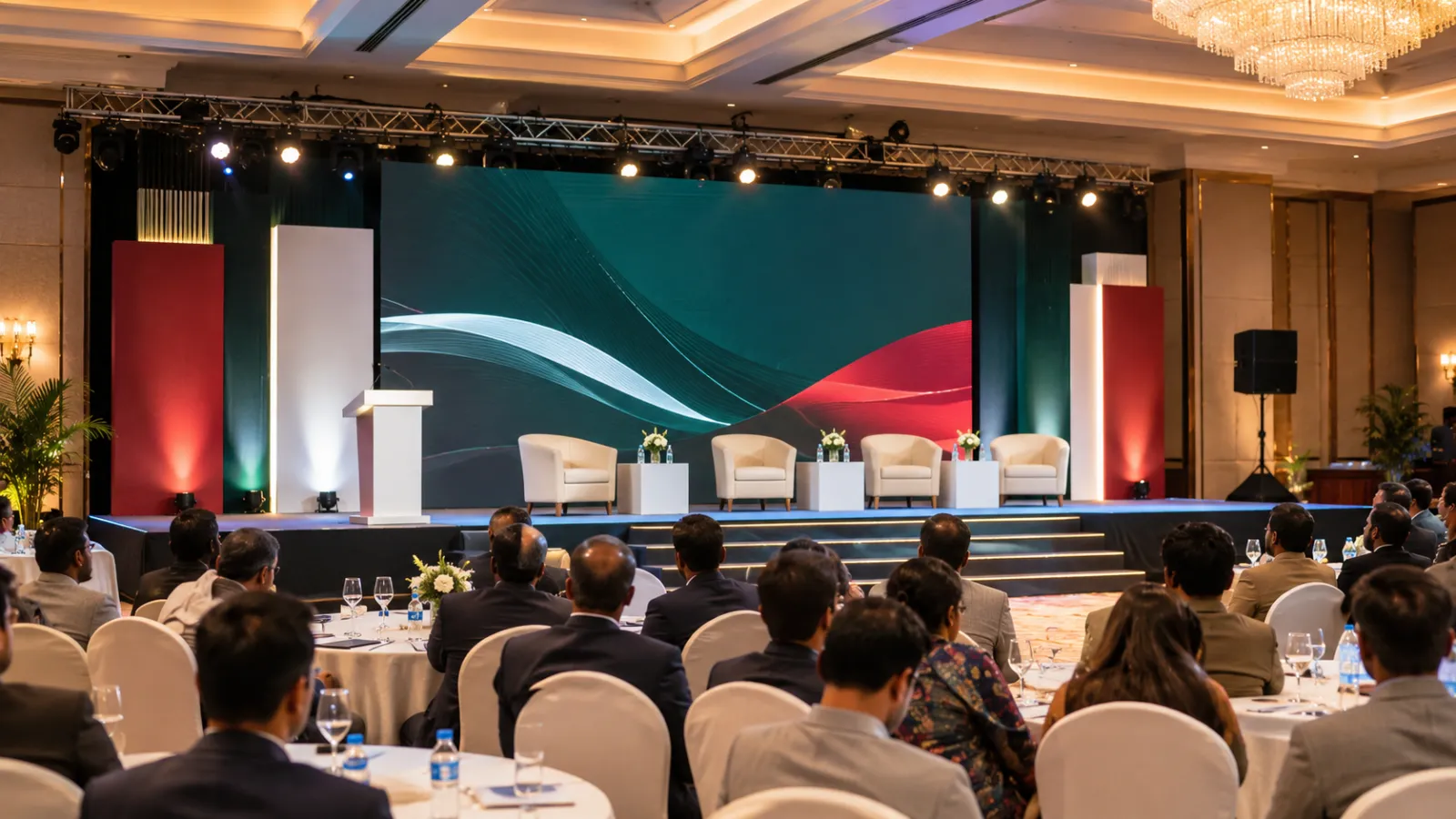
- Build check: walk the stage, backdrop and branding against the approved 3D and artwork list. Check spelling of names on screens and award certificates.
- Technical rehearsal: run every video, slide deck, walk-on music and microphone. Test the screen content from the back row.
- Speaker walk-through: show speakers the steps, podium, confidence monitor (if any) and where to stand for photos.
- Run of show: one sheet with times, cues, who is on stage, and who to call for each problem. Everyone gets the same version.
- Registration opens early: before the published start time, with a separate VIP line.
- Show calling: one person cues sound, lights and screens. Avoid giving instructions to the AV desk from several people.
- Dismantle: agree what returns to your office (standees, gifts, reusable branding) and what is cleared. The venue's clear-out time is the deadline.
- Close-out: collect photos and videos, settle supplier payments, gather feedback and note what to change next time.
Six Grid Studios has its own installation and dismantling team, so the people who build your stage are also the people who take it down.
Lahore-specific risks to plan for
- Smog season restrictions. In November 2024, EPA Punjab's Notification No. 121/DG/EPA/2024 banned outdoor sports events, exhibitions, festivals and outdoor dining in Lahore, Faisalabad, Gujranwala and Multan for a week, and closed shops, markets and malls at 8 pm. In November 2025, its Public Advisory No. 406/DG/EPA/2025 asked residents to avoid unnecessary outdoor movement during peak smog hours. If your event is outdoors or ends late, check current notices before you finalise the date and keep an indoor option.
- Weather for lawns and marquees. For outdoor venues, plan for rain cover, wind on tall backdrops, and heat for guests and crew.
- Traffic and parking. Allow for arrival time in your agenda, and share a location pin and parking instructions with invitations.
Questions to ask your production supplier
- Will you visit the venue and work from its actual dimensions and power points?
- Can I see a 3D visual of the stage and branding before you build?
- What exactly is included in the quotation — stage, backdrop, LED, sound, lighting, operators, transport, installation and dismantling?
- Who will be my single contact on setup day and event day?
- What is your backup plan if a screen, microphone or power source fails?
- When do you need final artwork and presentation files?
- Do you handle dismantling the same night, within the venue's timing?
- Which parts of the stage or branding can be reused at our next event?
Get a production quotation for your event
Share your date, venue, guest count and what happens on stage. We will reply on WhatsApp with next steps and a quotation for the stage, backdrop, AV and guest services you need. Call or WhatsApp 0326 9443049, email hello@6gridstudios.com, or visit our Gulberg III office.
FAQs
What should a corporate event planning checklist include?
It should cover the goal, budget and approver; venue booking and its setup, power and dismantle rules; stage, backdrop and branding; sound, lighting and screens; guest invitations and registration; catering; artwork approval; a technical rehearsal; the event-day run of show; and dismantling and close-out.
How early should we start planning a corporate event in Lahore?
Start as soon as the event is approved. The venue date and its setup access usually set every other deadline, so book the venue first and then ask each supplier how much time their part needs.
Should we hire one company for everything or separate vendors?
One production company reduces the number of contacts and the risk of gaps between stage, AV and branding. Separate vendors can work if someone on your team coordinates them and holds a single run of show.
What do we need to tell the venue before booking?
Share the guest count, event type, seating style, stage and screen plan, catering plan and the setup and dismantle time you need. Ask the venue to confirm power, generator backup, rigging rules and clear-out time in writing.
Can outdoor corporate events in Lahore be affected by smog?
Yes. In November 2024, for example, EPA Punjab banned outdoor exhibitions, festivals and sports events in Lahore for a week and closed markets at 8 pm. Check current EPA Punjab notices before fixing the date of an outdoor event and keep an indoor backup.
Do you provide complete corporate event production in Lahore?
Yes. Six Grid Studios supplies stages, backdrops, press walls, signage, LED screens, sound, lighting, guest management and catering for corporate events in Lahore, with our own installation and dismantling team.